Pick Simulation
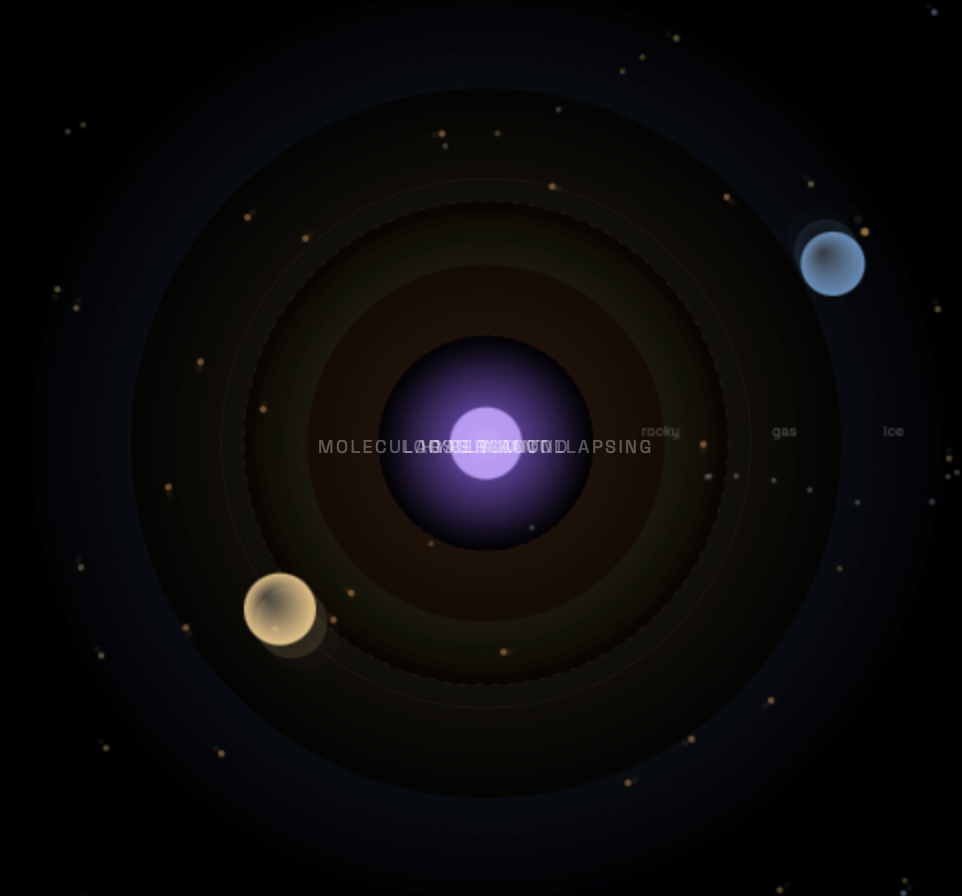
Celestial Bodies
Electricity
Waves
Optics
Magnetism
Thermodynamics
Quantum
Motion

This website brings together embodied learning research, gesture-based interaction, and playful exploration to transform how students experience physics. By turning hand movements into forces, waves, and electrical behaviour, the platform makes abstract concepts intuitive. Students discover principles through motion, experimentation, and real-time feedback.
This is a physics playground built for students who learn best by moving, testing, and trying things out. Instead of reading formulas or watching diagrams, you use your hands to build circuits, shape waves, and push forces around. Your gestures become the tools, and the science responds in real time.
Traditional physics learning often feels distant: lots of symbols, not enough experience. But physics is fundamentally about movement, energy, and interaction, things your body already understands. This platform brings those ideas to life by letting you explore them physically.
Research in enactive cognition shows that movement supports deeper understanding, especially in STEM subjects. My platform uses this principle to help students build intuition through exploration, experimentation, and play.
Read my research here!
To make physics accessible, engaging, and meaningful, not through memorisation, but through direct interaction with the ideas themselves.
Choose the physics world you want to explore.
Before you begin, you'll see the hand gestures you'll use for that topic.
Pay attention to how each gesture feels. Move slowly, move quickly, try different angles.
Experiment freely. Notice how much you need to move to cause each effect.
Your body becomes the way you understand the physics.
Each gesture controls a variable and the extent you do the gesture controls the value.
For example: Gravity is controlled using pinch — the looser the pinch, the lesser the gravity being applied!
The Student Dashboard acts as a personalised hub where students can access and manage their learning journey.
All saved experiments, progress, completed activities, and collected resources are stored here,
allowing students to revisit previous explorations, track their development over time, and continue learning at their own pace.